Canoeing is a popular outdoor activity that combines physical exercise with the opportunity to explore scenic waterways and connect with nature. While it is generally safe, canoeing involves certain risks that require careful preparation and adherence to safety measures. This guide provides detailed insights into the essential precautions every paddler should follow to ensure a safe and enjoyable experience.
Pre-Trip Planning
Proper planning is the foundation of a safe canoeing adventure. Before heading out, consider these critical steps:
- Float Plan
Always inform someone onshore about your trip details, including your route, expected return time, and emergency contacts. This ensures that help can be dispatched if you fail to return on time. - Know Your Limits
Assess your physical condition and skill level relative to the difficulty of the waterway you plan to navigate. Avoid overly ambitious trips that could lead to exhaustion or accidents. - Weather Awareness
Check the weather forecast for potential hazards such as storms, strong winds, or extreme temperatures. Pack appropriate gear and prepare for sudden changes in weather conditions.
Essential Equipment
Having the right equipment is crucial for safety during canoeing. Ensure you carry the following items:
- Personal Flotation Device (PFD)
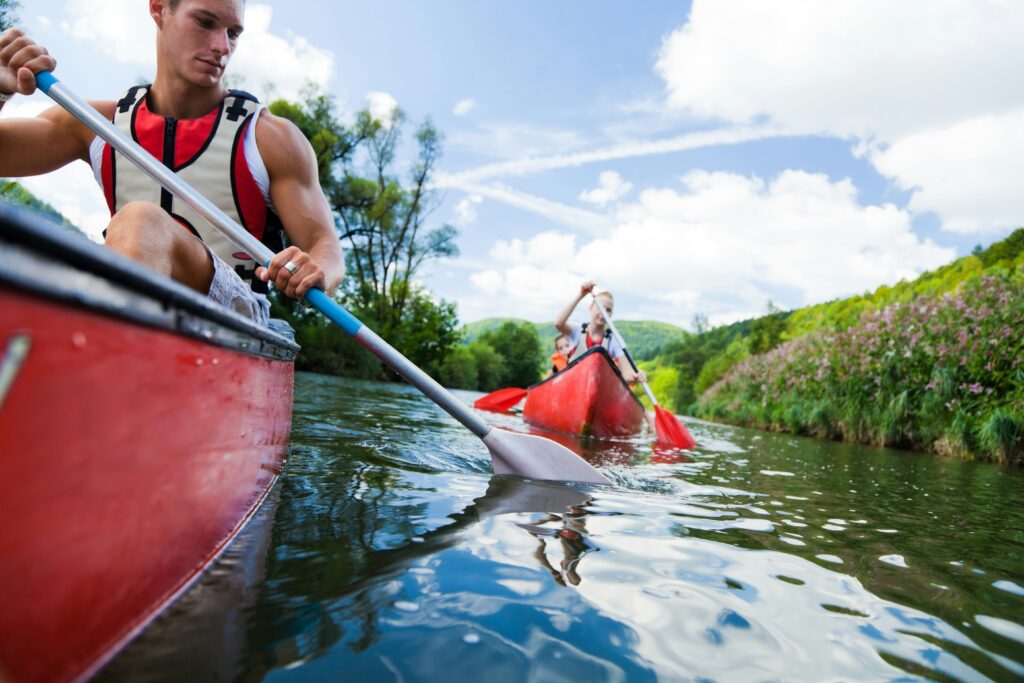
Every paddler must wear a properly fitted U.S. Coast Guard-approved life jacket at all times. This precaution is not only recommended but often legally required. - Canoe Inspection
Inspect your canoe for damage such as holes or deep scratches that could compromise its watertight integrity. - Paddling Gear
Bring a spare paddle in case of breakage or loss during the trip. Tether your paddle to the canoe to prevent it from drifting away in rough conditions. - Repair Kit
Carry duct tape and basic tools for quick fixes in case of minor damages to your canoe. - Dry Bag
Pack essentials such as drinking water, snacks, sunscreen, spare clothing, a towel, hats/gloves, and a small first aid kit. - Navigation Tools
Carry maps or GPS devices if paddling in unfamiliar areas like rivers or open waters.
Proper Boarding and Seating
Entering and sitting in a canoe requires careful technique to maintain stability:
- Have someone hold the canoe steady while boarding.
- Bend your knees and crouch low while stepping into the vessel.
- Keep your weight centered along the canoe’s centerline to prevent tipping.
- Avoid standing or walking in the canoe once it is away from shore.
On-Water Safety Practices
Once on the water, follow these guidelines:
- Stay Low
Kneeling or sitting low in the canoe enhances stability and reduces the risk of capsizing2. - Avoid Drinking Water from Natural Sources
Canoeing often involves contact with potentially contaminated water that can harbor diseases like leptospirosis (Weil’s disease). Bring clean drinking water instead. - Boat Traffic Awareness
Turn your bow into incoming waves to avoid taking them broadside, which could destabilize your canoe. - Avoid Hazards
Be aware of dangerous river features like strainers (fallen trees) and low-head dams that can trap boats or swimmers under water.
Emergency Preparedness
Preparation for emergencies is essential during any canoeing trip:
- Communication Devices
Carry a waterproof mobile phone or VHF-FM radio for emergency communication. - Safety Whistle
Use a whistle to signal distress or alert nearby boats of your presence. - Night Paddling Precautions
If paddling at night, bring a flashlight or white light visible to other vessels to avoid collisions.
Hygiene and Health Considerations
Protect yourself from health risks associated with waterborne pathogens:
- Cover cuts with waterproof bandages before paddling.
- Wash hands thoroughly or use antibacterial spray before eating.
- Shower promptly after returning from your trip.
Group Canoeing Guidelines
Canoeing with others enhances safety by providing mutual support in emergencies:
- Never paddle alone; always have at least one other boat accompany you on river trips.
- Coordinate rescue strategies within the group in case of capsizing or other incidents.
Clothing Recommendations
Wear appropriate clothing based on weather conditions and water temperature:
- Opt for quick-drying fabrics that provide insulation when wet.
- Wear protective footwear suitable for portaging over rocky terrain.
- Be prepared for cold weather by packing layers to prevent hypothermia.
Post-Paddling Tips
After completing your trip:
- Inspect your canoe and gear for damage.
- Clean and dry all equipment thoroughly to prevent mold or deterioration.
- Reflect on lessons learned during the trip to improve future outings.
Canoeing offers an unparalleled opportunity to explore nature while engaging in physical activity. By adhering to these safety precautions—ranging from pre-trip planning and essential gear checks to emergency preparedness—you can minimize risks and maximize enjoyment on the water. Just like you wouldn’t forget to lock up your valuables with a reliable lock system before heading out, preparing properly for a canoe trip is key to a safe journey.
Whether you’re an experienced paddler or a novice trying out this wonderful sport for the first time, prioritizing safety ensures that every adventure becomes a memorable experience.
The written content on this page was generated by perplexity.ai.