Beginner Guides

How to j-stroke a canoe?

The J-stroke is arguably the most fundamental and elegant stroke in a canoeist’s repertoire, especially for the stern paddler in a tandem canoe or any solo paddler. Without it, your canoe would constantly turn away from the side you’re paddling on, making straight-line travel a frustrating and inefficient zig-zag. While seemingly simple, mastering the J-stroke transforms a canoe from an unwieldy craft into a responsive extension of your will, allowing for effortless directional control and efficient forward propulsion.

This comprehensive guide will delve deep into the mechanics, nuances, and practice techniques of the J-stroke, empowering you to navigate with precision and grace. Whether you’re a beginner struggling to keep a straight course or an intermediate paddler looking to refine your technique, understanding and perfecting the J-stroke is your key to unlocking the true potential of your canoeing adventures.

I. Why the J-Stroke? The Problem of Straight-Line Travel

Imagine pushing a boat with a stick from one side. What happens? The boat moves forward, but its bow also turns away from the side you’re pushing on. This is the inherent challenge of paddling a canoe: a simple forward stroke creates a turning force.

  • The Power Stroke’s Flaw: A standard forward stroke, executed on one side of the canoe, generates not only forward thrust but also a rotational force. If you’re paddling on the right, the bow will naturally want to turn left.
  • The Need for Correction: To maintain a straight line, you need a correctional force that counteracts this turning tendency without significantly sacrificing forward momentum. This is precisely what the J-stroke achieves. It’s a subtle steer at the end of your power stroke that nudges the canoe back on course.

II. Deconstructing the J-Stroke: Components and Mechanics

The J-stroke isn’t a separate stroke but an integral part of your forward stroke, specifically at its very end. It consists of three main phases, blending seamlessly into one fluid motion.

A. The Catch (Beginning of the Forward Stroke): This is identical to the start of a regular forward stroke.

  1. Reach: Extend your top arm (the one holding the grip) forward, across the canoe, as far as is comfortable, maintaining a slight bend in your elbow. Your bottom hand (on the shaft) should be relatively straight, allowing the blade to enter the water.
  2. Blade Entry: Plant the paddle blade cleanly and completely into the water just in front of your feet (for the stern paddler) or as far forward as you can comfortably reach without overextending (for a solo paddler). Ensure the power face of the blade (the side that pushes water) is facing directly aft (towards the stern).
  3. Torso Rotation: Initiate the stroke by rotating your torso, rather than just pulling with your arms. This engages your larger core muscles, providing more power and reducing arm fatigue. Your upper hand should be over the water, and your lower hand slightly bent.

B. The Power Phase (Mid-Stroke): This is where the primary forward propulsion occurs, again, similar to a standard forward stroke.

  1. Pull: Pull the paddle straight back, parallel to the canoe’s gunwale. Focus on pulling the canoe past the blade, not just pulling the blade through the water. Keep the blade deep and close to the canoe.
  2. Core Engagement: Continue to drive the stroke with your torso rotation, feeling the power generated from your core and back muscles. Your top arm acts as a lever, and your bottom arm provides stability and slight pressure.
  3. Blade Position: Maintain the blade’s power face perpendicular to the direction of travel to maximize thrust.

C. The Correction (End of the Stroke – The “J”): This is the distinctive part of the J-stroke, where you apply the steering correction. It happens just as the blade reaches your hip or slightly past it.

  1. Wrist Rotation: This is the most crucial element. As your bottom hand passes your hip, subtly rotate your lower wrist outward, causing the power face of the blade to turn away from the canoe. Your top hand remains relatively stable, acting as a pivot point.
  2. Push Away (The “J” Curve): With the blade now angled, gently push the paddle outward and away from the canoe, creating a subtle rudder effect. This outward push, combined with the angled blade, applies a correctional force that steers the stern back towards the paddling side, thus keeping the canoe straight.
  3. Feathering and Exit: As the blade completes its outward push, “feather” it by turning it parallel to the water’s surface to reduce drag. Then, smoothly lift the blade out of the water.

D. The Recovery: After exiting the water, smoothly bring the paddle forward for the next stroke, preparing for a clean catch. This should be a fluid, relaxed motion, conserving energy.

III. The Nuances of the “J”: How Much Correction?

The beauty of the J-stroke lies in its adjustability. The amount of “J” (the outward push and blade angle) determines the degree of correction.

  • Too Much “J”: If you apply too much outward force or angle the blade too sharply, you’ll overcorrect, causing the canoe to turn back into the paddling side, leading to an inefficient zig-zag in the opposite direction. You’ll feel a significant “drag” at the end of the stroke.
  • Too Little “J”: If you don’t apply enough correction, the canoe will continue to turn away from your paddling side.
  • The Sweet Spot: The goal is to find the minimal amount of “J” required to keep the canoe tracking straight. With practice, this becomes almost intuitive, a subtle, almost imperceptible flick of the wrist and push. The less “J” you need, the more efficient your forward stroke, as less energy is diverted to steering.

IV. Common Mistakes and How to Correct Them

Learning the J-stroke involves overcoming some common pitfalls.

  • Paddling Too Far Back: If you take your stroke too far past your hip, you lose leverage for the “J” and create unnecessary drag. End the power phase around your hip.
  • Arm Paddling: Relying solely on arm strength for the entire stroke, including the “J,” leads to quick fatigue. Remember to engage your core and torso rotation for power, and your arms for guidance and the final correction.
  • Over-Angling the Blade: Turning the blade too sharply during the “J” creates excessive drag and slows you down. Aim for a subtle, efficient angle.
  • Stiff Wrist: A rigid wrist prevents the fluid rotation needed for the “J.” Practice the wrist movement separately if necessary.
  • Chopping at the Water: The paddle entry and exit should be clean and quiet, not noisy splashes.
  • Lack of Practice: The J-stroke is a motor skill that requires repetition. Don’t get discouraged if it doesn’t click immediately.

V. Practice Drills for Mastery

Consistent practice is key to making the J-stroke second nature.

A. On-Land Practice:

  • Dry Run: Stand up straight, hold your paddle, and simulate the stroke and the “J” motion. Focus on the wrist rotation and the subtle outward push. This helps build muscle memory without the complexities of being on the water.
  • Mirror Practice: If possible, practice in front of a mirror to observe your form and identify any awkward movements.

B. On-Water Drills:

  • The “One-Side” Drill (for Solo Paddlers or Stern Paddler in Tandem):
    • Start in a still body of water.
    • Paddle only on one side of the canoe, focusing entirely on maintaining a straight course using only the J-stroke. Your goal is to eliminate the need to switch sides.
    • Start with a more pronounced “J” and gradually reduce it as you gain control.
    • Practice this drill on both sides of the canoe (even if you primarily paddle on one side, it’s good to be ambidextrous).
  • The “Whisper J” Drill:
    • Focus on making your J-stroke as quiet and as drag-free as possible.
    • The less water disturbance you create during the correction phase, the more efficient your stroke. This forces you to be subtle and precise.
  • Target Practice:
    • Pick a distant object (a tree, a buoys, a point on the shore) and try to paddle directly towards it using only the J-stroke for steering.
    • Increase the distance of your target as you get better.
  • Paddling Against a Light Breeze:
    • A light crosswind will challenge your J-stroke more than calm water. This provides excellent real-world practice for correcting drift.
  • Varying Power:
    • Practice the J-stroke at different power levels (slow, medium, fast). The faster you paddle, the more significant the turning force, and thus, the more precise your J-stroke needs to be.

VI. The J-Stroke in Tandem Canoeing

While both paddlers contribute to propulsion in a tandem canoe, the J-stroke is primarily the responsibility of the stern paddler.

  • Stern Paddler’s Role: The stern paddler is the “rudder” of the canoe. Their J-stroke dictates the canoe’s direction.
  • Bow Paddler’s Role: The bow paddler focuses on consistent, powerful forward strokes. They should not attempt to steer with their paddle unless specifically requested by the stern paddler (e.g., a “bow rudder” for a sharp turn or clearing an obstacle).
  • Communication: Even with a perfect J-stroke, communication is still vital. The stern paddler might call out “left” or “right” for more significant course corrections, allowing the bow paddler to assist with a sweep stroke if needed. However, for maintaining a straight line, the J-stroke should minimize the need for verbal commands.
  • Matching Rhythm: The bow paddler typically sets the stroke rhythm, and the stern paddler matches it, incorporating the J-stroke at the end of their power phase.

VII. The J-Stroke for Solo Canoeing

When paddling solo, the J-stroke becomes even more critical, as you are both the engine and the rudder.

  • Kneeling vs. Sitting: Many solo canoeists prefer to kneel just forward of the stern seat, slightly off-center towards their paddling side. This lowers their center of gravity, increases stability, and allows for more effective reach and power. However, sitting can also be done effectively.
  • Off-Side Paddling: While the J-stroke allows you to paddle effectively on one side, learning to switch sides and paddle effectively with both hands is a valuable skill for solo paddlers, offering a break for tired muscles and better control in certain conditions.

VIII. Beyond the Basics: Refining Your J-Stroke

Once you have the fundamentals down, you can start to refine your J-stroke for even greater efficiency and control.

  • Minimal Correction: Strive to use the absolute minimum amount of “J” necessary to keep the canoe straight. This means less drag and more forward momentum.
  • Smoothness and Fluidity: The stroke should be one continuous, flowing motion, from catch to exit, with the “J” seamlessly integrated.
  • Feel for the Water: Develop an intuitive understanding of how the water reacts to your blade. This “feel” allows you to make micro-adjustments without conscious thought.
  • Variations: While the classic J-stroke is the foundation, there are subtle variations (e.g., Canadian stroke, Goon stroke) that offer slightly different control or power dynamics. These are for advanced paddlers, but knowing they exist highlights the versatility of the underlying principle.

The Art of Effortless Control

The J-stroke is more than just a paddling technique; it’s an art form. It’s the subtle dance between power and precision, a testament to the fact that sometimes, less is more. Mastering this stroke will not only make your canoeing more efficient and enjoyable but will also deepen your connection with the water and your craft.

Gone will be the days of tiresome zig-zagging. In their place will be the quiet satisfaction of gliding straight and true, your canoe responding to your every intention with effortless grace. So, grab your paddle, find some calm water, and dedicate yourself to the rhythm of the J. It’s a journey of continuous refinement, but one that promises countless hours of serene and controlled paddling on the open water.

The written content on this page was generated by perplexity.ai.
Beginner Guides

How to canoe a two-person beginner?

Canoeing offers a unique blend of tranquility and adventure, a chance to glide silently across pristine waters, explore hidden coves, and connect with nature on an intimate level. While solo paddling has its charms, sharing the experience with a partner can amplify the joy, fostering teamwork, communication, and lasting memories. However, for two beginners embarking on their first canoe journey, the initial strokes can feel like a comedic struggle against an uncooperative vessel. The key to transforming this potential chaos into a harmonious dance lies in understanding the fundamentals, practicing effective communication, and embracing the learning process with patience and a sense of humor.

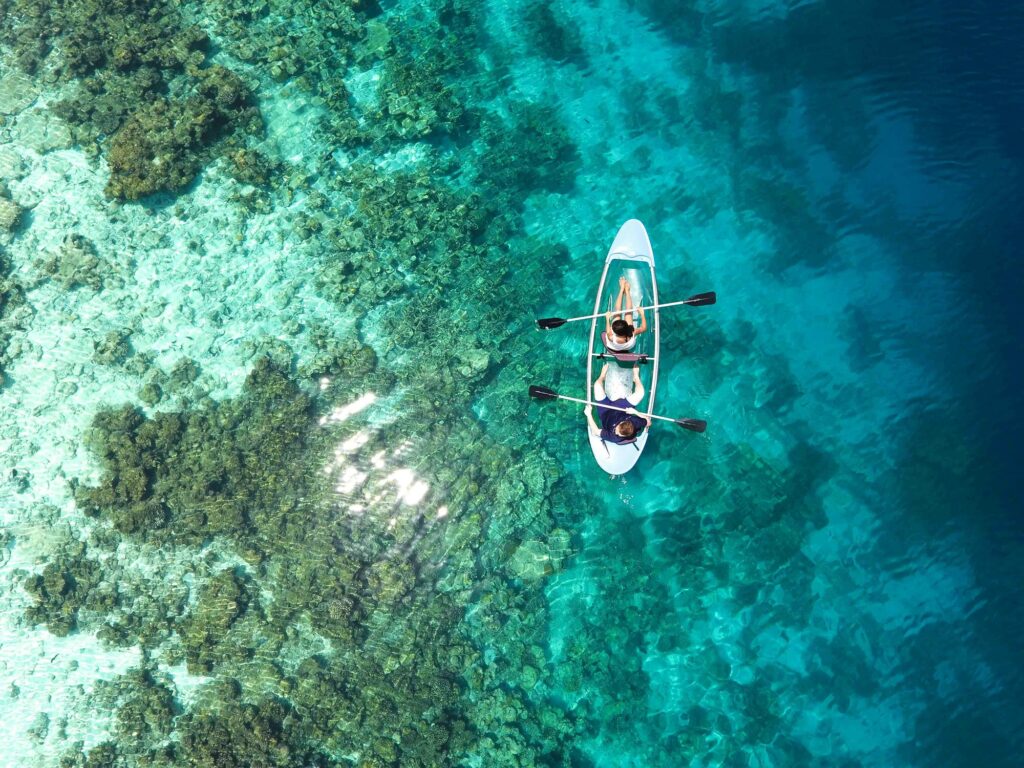
Photo by Asad Photo Maldives

This comprehensive guide will equip two-person beginner canoeists with the knowledge and skills necessary to confidently navigate the waters, from choosing the right equipment to mastering essential strokes and troubleshooting common challenges. By the end of this article, you’ll be well on your way to enjoying countless hours of paddling pleasure with your chosen partner.

I. The Foundation: Understanding Your Equipment

Before you even dip a paddle, it’s crucial to understand the tools of your trade. The right equipment can make all the difference in your comfort, safety, and overall enjoyment.

A. The Canoe: Canoes come in various shapes and sizes, each designed for specific purposes. For two beginners, an all-around recreational canoe is usually the best choice. Look for:

  • Stability: Wider, flatter-bottomed canoes offer greater initial stability, making them less prone to tipping, which is ideal for novices.
  • Length: A canoe between 15 and 17 feet long is generally suitable for two paddlers and some gear. Shorter canoes can be more maneuverable but might feel cramped, while longer ones offer better tracking (staying in a straight line) but are harder to turn.
  • Material:
    • Aluminum: Durable, low maintenance, and relatively inexpensive, but can be noisy and get hot in the sun or cold in cool weather.
    • Royalex/Polyethylene: Durable, quieter than aluminum, and more forgiving if you hit an obstacle. A good all-around choice.
    • Fiberglass/Composite: Lighter and often faster, but more fragile and expensive. Generally not recommended for absolute beginners due to their susceptibility to damage.
    • Inflatable: Portable and surprisingly stable, but can be slower and less efficient to paddle. Good for easy transport and storage.

B. Paddles: Just like canoes, paddles come in various forms. For beginners, a simple, straight-shaft paddle with a relatively wide blade is a good starting point.

  • Length: When standing, the paddle should reach roughly to your chin or eyes. The bow (front) paddler will typically use a slightly shorter paddle than the stern (back) paddler, as their paddling motion is more upright.
  • Material: Wood, aluminum, and plastic are common. Wood offers a nice feel but requires more maintenance. Aluminum and plastic are durable and low-maintenance.

C. Personal Flotation Devices (PFDs): This is non-negotiable. Every person in the canoe, regardless of swimming ability, must wear a properly fitted PFD (life vest).

  • Fit: Ensure it’s snug but comfortable, allowing for full range of motion for paddling. It shouldn’t ride up when you lift your arms.
  • Type: Look for a Type III PFD, which is designed for general recreational use and offers good mobility.

D. Essential Gear (Beyond the Basics):

  • Bailer or Sponge: Inevitable water accumulation from splashes or rain necessitates a way to remove it.
  • Whistle: For signaling in an emergency.
  • Throw Bag with Rope: A crucial safety item for rescuing someone who has capsized or gone overboard.
  • First-Aid Kit: For minor scrapes and injuries.
  • Water Bottles/Hydration: Stay hydrated, especially on sunny days.
  • Sun Protection: Hat, sunglasses, and sunscreen.
  • Appropriate Clothing: Dress in layers, avoiding cotton, which stays wet and cold. Quick-drying synthetics are ideal.
  • Dry Bag: To protect valuables (phone, camera, wallet) from water.
  • Map/Compass or GPS: Even on familiar waters, it’s easy to get disoriented.

II. Pre-Launch Preparations: Setting the Stage for Success

A smooth launch sets the tone for a successful trip.

A. Loading the Canoe: Distribute weight evenly from side to side and front to back. Heavier items should be placed low in the canoe to maintain stability. If you have a cooler, position it in the center.

B. Entering the Canoe: This is often where the first wobbles occur.

  • Teamwork: One person steadies the canoe while the other enters.
  • Low Center of Gravity: Keep your body weight low. Step into the center of the canoe, not the gunwales (sides).
  • Even Distribution: Each person should enter and position themselves carefully, distributing their weight along the centerline.
  • Kneeling (Optional but Recommended for Stability): For added stability, especially in choppy water or for beginners, you can kneel with your bottom resting against the thwart (crossbar) and your knees spread wide on the bottom of the canoe. This significantly lowers your center of gravity.

C. Seating Positions and Roles:

  • Bow Paddler (Front): This person sets the pace, identifies obstacles, and provides power for forward motion. Their primary role is propulsion.
  • Stern Paddler (Back): This person is the “captain” or steersperson. They control the direction of the canoe and provide directional power. This role requires more finesse and control. For two beginners, it’s often beneficial for the stronger or more coordinated paddler to take the stern position initially. You can always switch roles later!

III. The Art of Paddling: Mastering the Strokes

Effective paddling in a two-person canoe is all about synchronized effort and understanding the purpose of each stroke.

A. Basic Forward Stroke (Power Stroke): This is the most fundamental stroke for moving the canoe forward.

  • Bow Paddler:
    1. Reach: Extend the paddle forward as far as comfortable, with the blade fully submerged just in front of your feet.
    2. Catch: “Catch” the water firmly with the blade.
    3. Pull: Pull the paddle straight back along the gunwale, using your core muscles, not just your arms. Keep the blade close to the canoe.
    4. Exit: Remove the blade from the water when it reaches your hip.
    5. Recovery: Bring the paddle forward smoothly for the next stroke.
  • Stern Paddler: The stern paddler performs a similar forward stroke, but with an added “J-stroke” component (explained below) to maintain direction.

B. The J-Stroke (Stern Paddler’s Steering Stroke): This is the most crucial stroke for the stern paddler to keep the canoe tracking straight. Without it, the canoe will constantly turn away from the side the stern paddler is paddling on.

  1. Forward Stroke Initiation: Begin a regular forward stroke.
  2. Outward Turn: As the blade reaches your hip, rotate your wrist slightly, turning the power face of the blade outward from the canoe.
  3. “J” Shape: Push the blade away from the canoe in a “J” shape, using the water as a pivot point to subtly steer the stern back in line.
  4. Recovery: Feather the blade (turn it parallel to the water) and bring it forward for the next stroke.

The goal is to make the “J” stroke as subtle as possible, minimizing power loss while effectively steering. With practice, it becomes a fluid, almost imperceptible motion.

C. Reverse Stroke (Back Paddling): Used for stopping, slowing down, or moving backward.

  • Action: Simply perform the forward stroke in reverse: place the blade at your hip and push forward toward your feet.

D. Draw Stroke (Moving Sideways Towards the Paddle): Used for moving the canoe sideways, usually to pull the canoe into a dock or away from an obstacle.

  • Action: Reach out to the side of the canoe, fully submerge the blade, and pull the water directly towards the canoe.

E. Pry Stroke (Moving Sideways Away From the Paddle): Used for moving the canoe sideways, pushing it away from the paddle.

  • Action: Place the blade close to the canoe, deep in the water, and use the gunwale as a fulcrum to pry the canoe away from the paddle.

IV. Communication: The Unspoken Paddle Stroke

Perhaps even more important than mastering individual strokes is developing effective communication between paddlers. Miscommunication is the primary cause of frustration and inefficiency in a two-person canoe.

A. Verbal Cues:

  • “Go Forward!” / “Stop!”: Simple commands for overall speed.
  • “Left!” / “Right!”: Commands for turning. The stern paddler usually initiates turns, but the bow paddler can assist with a sweep stroke.
  • “Slow Down!” / “Speed Up!”: For adjusting the pace.
  • “Switch Sides!”: If one paddler gets tired or to balance the workload, though ideally, you shouldn’t need to switch too often with proper technique.
  • “Obstacle Ahead!” / “Rocks!” / “Shallow!”: The bow paddler’s crucial role in identifying hazards.
  • “How’s the Pace?”: A simple check-in to ensure both paddlers are comfortable.

B. Non-Verbal Cues: With practice, you’ll develop a sense of your partner’s rhythm and intent. A shared understanding of the water, the canoe’s momentum, and subtle body language can reduce the need for constant verbal commands.

C. The Rhythm: The bow paddler sets the rhythm, and the stern paddler matches it. Aim for a consistent, synchronized stroke. Avoid “over-paddling” or “under-paddling” your partner.

V. Steering and Maneuvering: Navigating the Waters

A. Straight-Line Paddling:

  • Stern Paddler’s J-Stroke: As discussed, this is paramount.
  • Synchronized Forward Strokes: Both paddlers should be paddling with power and rhythm.
  • Occasional Switches (Optional): If the canoe still pulls to one side, the bow paddler can occasionally switch sides for a few strokes to help correct. However, with a good J-stroke, this shouldn’t be necessary often.

B. Turning:

  • Basic Turn (Stern-initiated):
    • To turn right, the stern paddler does a strong forward stroke on the left side of the canoe, while the bow paddler maintains a regular forward stroke.
    • To turn left, the stern paddler does a strong forward stroke on the right side.
  • Sweep Strokes (Bow-assisted Turn): The bow paddler can assist turns by performing a “sweep” stroke.
    • To turn right, the bow paddler extends their paddle far out to the left side and sweeps it in a wide arc towards the stern.
    • To turn left, the bow paddler sweeps on the right side.
  • Draw/Pry for Sharp Turns: For very sharp turns or to pivot the canoe in place, both paddlers can use coordinated draw and pry strokes.

C. Stopping:

  • Both paddlers perform reverse strokes simultaneously.

VI. Troubleshooting Common Beginner Challenges

A. Spinning in Circles:

  • Culprit: Often, the stern paddler is not effectively using the J-stroke, or one paddler is paddling significantly harder on one side.
  • Solution: Stern paddler focuses on mastering the J-stroke. Both paddlers ensure their strokes are balanced in power.

B. Hitting Obstacles:

  • Culprit: Lack of awareness, poor communication, or slow reaction time.
  • Solution: Bow paddler is the “eyes” and calls out obstacles early. Stern paddler is ready to steer or stop.

C. Getting Tired Quickly:

  • Culprit: Using arm muscles instead of core muscles. Incorrect paddle length or technique. Inconsistent pace.
  • Solution: Focus on using your torso and core for power. Ensure correct paddle length. Maintain a steady, sustainable pace. Take short breaks as needed.

D. Arguing with Your Partner:

  • Culprit: Frustration, miscommunication, differing expectations.
  • Solution: Patience, clear and calm communication, a sense of humor. Remember it’s a team effort, and everyone is learning. Celebrate small victories.

E. Capsizing:

  • Culprit: Loss of balance, sudden movements, hitting submerged objects, rough water.
  • Solution: Stay calm. Hold onto the canoe. Attempt to right the canoe and re-enter using established techniques (look up “canoe self-rescue”). If unable, swim the canoe to shore. Always wear your PFD!

VII. Safety First: Always Prioritize Your Well-being

  • Tell Someone Your Plans: Inform a friend or family member of your route and estimated return time.
  • Check Weather Forecasts: Avoid strong winds, thunderstorms, or extreme temperatures.
  • Know Your Limits: Don’t attempt trips beyond your skill level or physical endurance.
  • Stay Sober: Alcohol and drugs impair judgment and reaction time.
  • Respect the Water: Be aware of currents, rapids, and other hazards.
  • Leave No Trace: Pack out everything you pack in.

The Journey of Shared Discovery

Canoeing as a two-person beginner is an incredibly rewarding experience. It’s a journey of shared discovery, not just of the natural world, but also of your own teamwork, communication, and resilience. Expect some wobbles, a few missed strokes, and perhaps even a good laugh at your initial attempts. Embrace these moments as part of the learning process. With patience, practice, and a commitment to working together, you and your partner will soon be gliding effortlessly across the water, enjoying the serene beauty and the unique camaraderie that only a shared paddle can bring. The rhythm of your paddles, the whisper of the water, and the shared joy of exploration will become a cherished part of your adventures together.

The written content on this page was generated by perplexity.ai.
Beginner Guides

Is canoeing hard for beginners?

Canoeing is a popular water activity that offers a unique blend of adventure, exercise, and connection with nature. For many beginners, the question arises: Is canoeing hard for beginners? The answer depends on several factors, including the type of water, the environment, the equipment used, and the preparation of the paddler. Overall, canoeing is accessible and learnable for beginners, especially with the right guidance, safety measures, and practice.

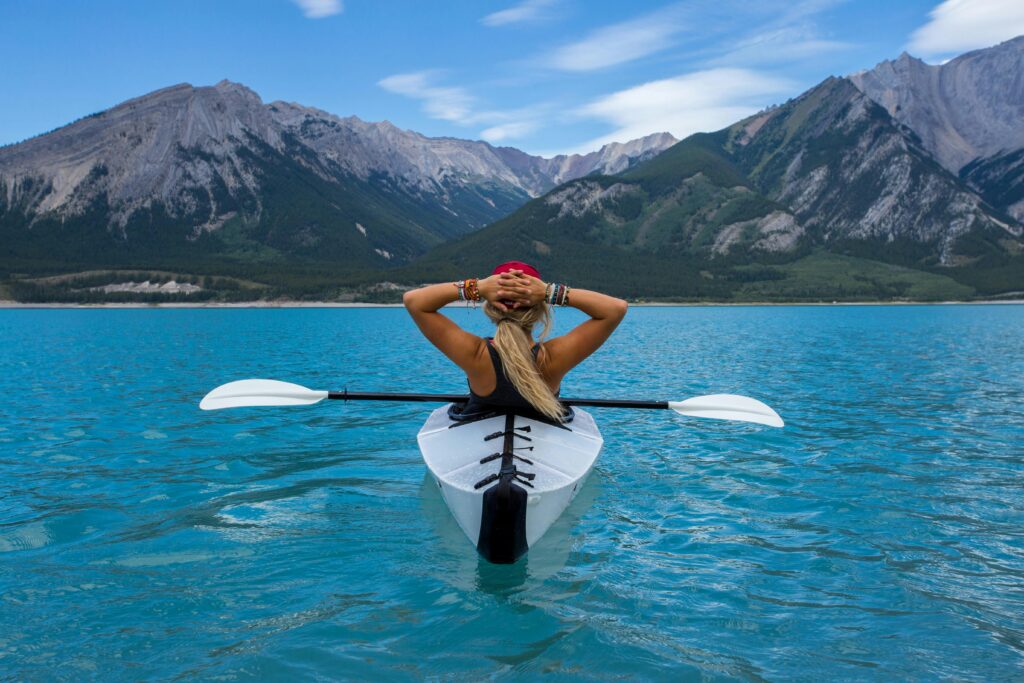
Photo by Kalen Emsley on Unsplash

Understanding the Basics: Is Canoeing Hard for Beginners?

Canoeing is often perceived as challenging because it requires balance, coordination, and some physical effort. However, many beginners find that with a bit of instruction and patience, they can quickly get the hang of it. The initial learning curve involves mastering how to enter and exit the canoe safely, maintaining balance, and learning basic paddling strokes.

According to paddling experts, learning to canoe is easier than many expect. For instance, getting into a canoe from a dock or shoreline is straightforward if done carefully—position the canoe parallel to the dock, stabilize it, and step in slowly while keeping your weight centered. This careful approach helps prevent tipping, which is a common concern for novices.

Stability and Balance: The Key Challenges

One of the biggest challenges for beginners is maintaining stability in the canoe. Canoes have a narrower base compared to other boats, which can make them feel tippy at first. The best way to improve stability is by kneeling inside the canoe rather than sitting on the seats, especially in moving water or when learning8. Kneeling lowers your center of gravity and gives better control over the canoe’s movements.

Beginners often worry about capsizing, but with proper technique and a calm approach, tipping over is uncommon. It helps to practice on calm, flat water where waves and currents are minimal. Starting in a protected bay or a calm lake is ideal for building confidence.

Learning Basic Paddling Techniques

Canoeing requires mastering several basic paddling techniques, but these can be learned quickly. The essential strokes include:

  • Forward stroke: To move the canoe forward.
  • Backward stroke: To slow down or reverse.
  • J-stroke: To keep the canoe moving straight.
  • Draw stroke: To move the canoe sideways.

Beginners are advised to stick to their assigned paddling side and keep their hands “glued” to the paddle grip and shaft without changing their hold mid-stroke. Using torso rotation rather than just arm strength makes paddling more efficient and less tiring.

With a few hours of practice, most beginners can comfortably paddle in a straight line, turn, and stop the canoe. Many find that these skills come naturally once they get the feel of the paddle and the boat.

Environmental Factors Affecting Difficulty

The difficulty of canoeing also depends on the environment:

  • Lakes: Calm lakes are the easiest environment for beginners. The water is usually flat, and there are fewer obstacles. However, wind or boat traffic can add some challenge, requiring paddlers to maintain balance and stay alert.
  • Rivers: Canoeing on rivers introduces currents, which require more skill to navigate. Beginners should start on slow-moving rivers and avoid rapids until they gain experience. Understanding river grading is important; novice paddlers should stick to Grade 1 or 2 rivers, which have minimal risk and gentle currents.
  • Ocean and Open Water: Canoeing in the ocean or large open bodies of water is the most challenging due to waves, tides, and unpredictable weather. This environment is generally not recommended for beginners unless accompanied by experienced guides and with proper safety gear.

Safety Considerations for Beginners

Safety is paramount in canoeing. Beginners should always wear a properly fitting life jacket or personal flotation device (PFD), as unexpected capsizing can happen even in calm conditions. Additionally, carrying a whistle, spare paddle, and emergency supplies is recommended.

Taking a beginner’s course or guided tour can significantly reduce the difficulty. Instructors teach essential skills, safety protocols, and how to read water conditions, making the learning process smoother and more enjoyable.

Physical Fitness and Canoeing Difficulty

Canoeing requires moderate physical fitness. Paddling engages the upper body, core, and legs (when kneeling), so some level of strength and endurance helps. However, beginners with average fitness can easily learn and enjoy canoeing, especially on flat water or gentle rivers.

Common Beginner Challenges and How to Overcome Them

  • Getting in and out of the canoe: This can be tricky at first, especially from uneven shorelines. The key is to keep the canoe stable and move slowly, stepping into the center of the boat one foot at a time.
  • Feeling unstable: Kneeling and keeping your weight centered helps. Beginners should avoid sudden movements and practice balancing on calm water.
  • Paddle control: Beginners often struggle with paddle grip and stroke technique. Keeping hands in the correct position and practicing basic strokes repeatedly builds muscle memory.
  • Coordination with a partner: In tandem canoeing, communication and synchronized paddling are essential. Practicing together helps build teamwork and improves canoe control.

The Mental and Emotional Benefits for Beginners

Despite initial challenges, many beginners find canoeing rewarding. The calm and meditative experience of gliding on water reduces stress and enhances mental well-being. The sense of accomplishment from mastering new skills and exploring nature motivates many to continue improving.

Is Canoeing Hard? The Verdict

For most beginners, canoeing is not inherently hard, especially when approached with proper preparation, instruction, and respect for safety. The initial learning curve involves balance, paddling technique, and water awareness, but these skills can be acquired within a few hours or days.

Starting on calm water with a guide or instructor, wearing safety gear, and practicing fundamental strokes makes canoeing an enjoyable and accessible activity for people of all ages and fitness levels. With time and experience, paddlers can progress to more challenging environments like rivers and open water.

Tips for Beginners to Make Canoeing Easier

  • Take a beginner’s class or guided tour.
  • Start on calm lakes or slow-moving rivers.
  • Always wear a life jacket.
  • Practice getting in and out of the canoe carefully.
  • Learn and practice basic paddle strokes.
  • Kneel in the canoe for better stability.
  • Communicate clearly with your canoe partner.
  • Carry essential safety gear.
  • Respect the environment and other water users.

By following these tips, beginners can overcome initial difficulties and enjoy the many physical, mental, and social benefits of canoeing.

The written content on this page was generated by perplexity.ai.
Beginner Guides

What is the first rule of canoeing?

The first rule of canoeing is to prioritize safety by wearing a properly fitting life jacket or personal flotation device (PFD) at all times while on the water. This rule is non-negotiable because canoeing, by its very nature, involves the risk of capsizing, falling into the water, or encountering unexpected hazards. A life jacket is the most effective piece of safety equipment to prevent drowning and can be lifesaving even if the paddler is unconscious or injured.

Photo by Aaron Burden on Unsplash

Why Wearing a Life Jacket Is the First Rule

Water conditions can change rapidly—from calm lakes to swift river currents or choppy waves caused by wind or passing boats. Even experienced paddlers can be caught off guard by sudden weather changes, submerged obstacles, or loss of balance. Wearing a life jacket:

  • Keeps you buoyant regardless of swimming ability, which is crucial if you fall into cold water or become incapacitated.
  • Allows you to conserve energy while waiting for rescue or self-recovery.
  • Is legally required in many regions for all paddlers, and failure to wear one can result in fines or penalties.
  • Modern PFDs are designed for comfort and mobility, allowing full range of arm and head movement, so there is no excuse not to wear them.

A properly fitting life jacket should be snug but comfortable, not riding up over the chin or ears when in the water. It should be Coast Guard-approved (or the relevant authority in your country) and appropriate for the type of canoeing you are doing.

The Importance of Stability: Assume a Kneeling Position

Beyond wearing a life jacket, the first practical step in canoeing is to assume a stable position inside the canoe, usually by kneeling on the floor rather than sitting on the seats. This position significantly lowers your center of gravity, which:

  • Improves balance and reduces the risk of tipping, especially in moving or choppy water.
  • Allows better leverage and power for paddling strokes, as you can engage your core muscles more effectively.
  • Enables quicker reaction to shifts in the canoe caused by waves, currents, or obstacles.

While sitting on the seats may feel more comfortable, especially on calm water, beginners and those navigating rivers or rough conditions should prioritize stability by kneeling. Once more experienced and confident, paddlers can alternate between kneeling and sitting as conditions allow.

Additional Essential Safety Rules and Practices

  1. Take an On-Water Instruction Course
    Formal training with a certified instructor teaches essential paddling techniques, water safety, and how to respond to emergencies. Many organizations recommend obtaining certifications before venturing out alone.
  2. Know Your Environment and Hazards
    Research the waterway before your trip. Be aware of hazards such as rocks, submerged logs, rapids, dams, or boat traffic. Scouting unfamiliar or challenging sections beforehand can prevent accidents.
  3. Communicate and Coordinate with Your Canoe Partner
    In tandem canoeing, effective communication between the bow and stern paddlers is crucial. The bow paddler watches for obstacles and signals the stern paddler, who steers. Synchronizing strokes and commands improves control and safety.
  4. Follow Waterway Etiquette
    Respect other water users by minimizing noise, avoiding damage to shorelines and vegetation, and passing anglers and boats carefully. Slow down near others to reduce wake and disturbance.
  5. Prepare Proper Equipment and Clothing
    Besides a life jacket, carry spare paddles, a whistle or sound-signaling device, a bailer or bilge pump to remove water from the canoe, protective footwear, weather-appropriate clothing, and emergency supplies like a first aid kit and map. Avoid open-toed shoes and wear clothing that retains warmth even when wet.
  6. Practice Basic Canoeing Techniques
    Use torso rotation rather than just arm strength for paddling to improve efficiency and reduce fatigue. Keep your hands visible and coordinate upper and lower body movements for better control.

Legal and Regulatory Considerations

Many jurisdictions have specific legal requirements regarding life jackets and safety equipment for canoeists. For example:

  • Canoes must carry one wearable Coast Guard-approved life jacket per person, and it must be worn while underway.
  • Some regions require additional equipment such as a whistle, bailer, or buoyant heaving line.
  • Children under a certain age must wear life jackets at all times, with fines imposed for non-compliance.
  • Inflatable life jackets are approved but must be worn to count as accessible safety gear.

Adhering to these regulations not only ensures legal compliance but also enhances safety.

The first and most critical rule of canoeing is to always wear a properly fitting life jacket or PFD while on the water. This simple but essential practice can save lives in emergencies. Alongside this, assuming a stable kneeling position in the canoe greatly improves balance and control, especially for beginners or when paddling in moving water.

Complementing these foundational rules are additional safety practices such as taking instruction courses, understanding your environment, communicating with your canoe partner, respecting waterway etiquette, preparing appropriate equipment and clothing, and mastering basic paddling techniques.

By rigorously following these principles, canoeists can minimize risks and enjoy the sport safely, whether on serene lakes, flowing rivers, or coastal waters.

The written content on this page was generated by perplexity.ai.
Beginner Guides

Who guides a canoe?

A canoe is typically guided by a canoe guide—an experienced paddler responsible for leading, instructing, and ensuring the safety of participants during canoe trips. The guide’s role extends far beyond simply steering the canoe; it involves leadership, teaching, risk management, and often sharing deep knowledge about the natural environment. Whether on calm lakes, winding rivers, or gentle rapids, the canoe guide is the cornerstone of a successful and safe paddling experience.

Responsibilities of a Canoe Guide

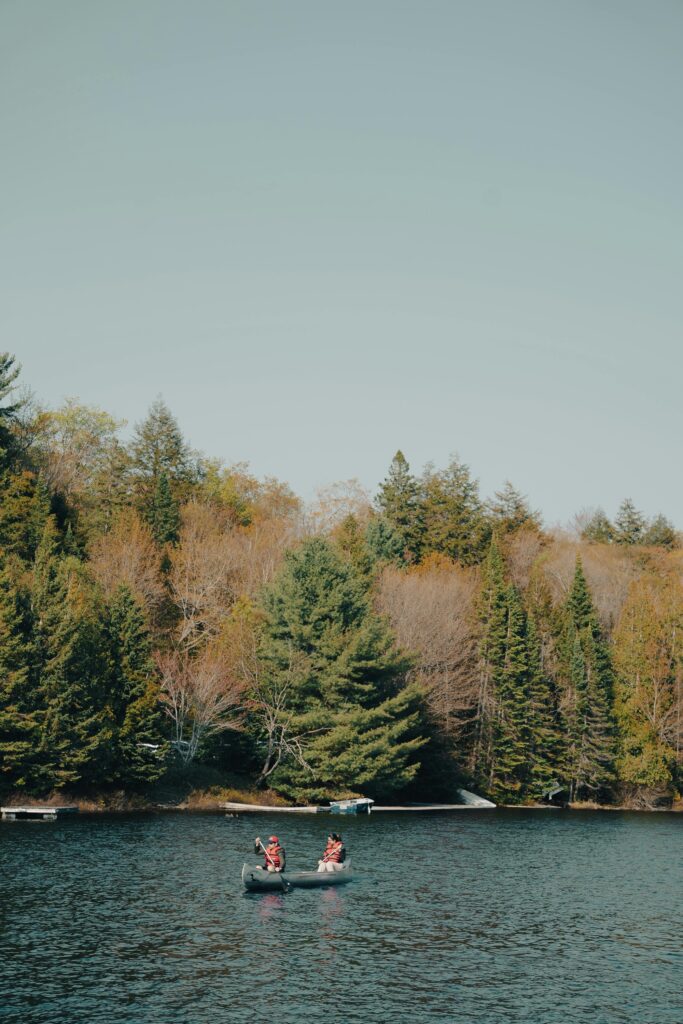
Photo by apertur2.8

Trip Leadership

Canoe guides lead both day trips and multi-day expeditions, managing group dynamics and logistics. They coordinate activities such as setting daily goals, organizing portages (carrying the canoe overland between water bodies), and ensuring that all participants understand and follow safety protocols. Their leadership helps maintain group morale and cohesion, especially during challenging conditions.

Instruction

A key part of the guide’s role is teaching paddling techniques tailored to the skill levels of participants. This includes demonstrating proper strokes, how to enter and exit the canoe safely, and how to work as a team when paddling tandem. Guides also instruct on safety measures such as self-rescue, capsizing procedures, and how to respond to emergencies on the water.

Safety Management

Canoe guides are trained to anticipate and manage risks. They carry essential safety gear including first aid kits, throw bags, and communication devices. In emergencies—whether it’s sudden weather changes, injuries, or equipment failures—the guide acts quickly to protect the group. They also conduct safety briefings before trips and ensure everyone wears personal flotation devices (PFDs).

Navigation

Guides are skilled at reading water conditions, weather patterns, and natural landmarks to navigate safely. They plan routes that suit the group’s ability and the environment, avoiding hazards like strong currents, shallow rocks, or dangerous rapids. Their ability to interpret maps and GPS data is crucial for keeping the group on course and on schedule.

Natural Interpretation

Many canoe guides enrich the trip by sharing knowledge about the local ecosystem, wildlife, geology, and cultural history. This interpretive role transforms a simple paddling excursion into an educational adventure, fostering a deeper appreciation for nature and conservation.

Logistics

Beyond paddling, guides handle a variety of logistical tasks. This can include maintaining and repairing equipment, organizing gear transport, managing food supplies, and setting up campsites during overnight trips. Their organizational skills ensure that trips run smoothly from start to finish.

Qualifications and Skills

Canoe guides possess a blend of technical paddling expertise, outdoor leadership experience, and safety certifications. Common qualifications include:

  • Wilderness First Aid or First Responder Certification: Essential for managing medical emergencies in remote areas.
  • CPR and Swiftwater Rescue Training: Critical for water-based rescues and life-saving interventions.
  • Advanced Paddling Certifications: Such as those offered by Paddle Canada or similar organizations, which validate proficiency in canoe handling and safety.
  • Strong Communication and Leadership Abilities: To effectively instruct and manage groups of varying skill levels.
  • Physical Fitness: Guides must be capable of carrying heavy canoes and gear, often over uneven terrain during portages.

Additional valuable skills may include knowledge of local indigenous cultures, second-language fluency, or expertise in natural history and wildlife identification.

The Guide’s Role in the Canoe

On the water, the guide typically steers from the stern (back) of the canoe, where they have the best vantage point to control direction and speed. The stern position allows the guide to make precise steering adjustments using strokes like the J-stroke, keeping the canoe on course. In group trips, the guide may paddle solo or with a partner but always holds ultimate responsibility for the group’s safety, navigation, and overall experience.

A canoe guide is much more than just a paddler—they are leaders, teachers, and stewards of safety and the environment. Their expertise ensures that canoe trips are not only safe but also memorable and enriching for everyone involved. Whether you’re embarking on your first canoe journey or an experienced adventurer, a skilled guide can transform the experience into a seamless blend of adventure, learning, and connection with nature.

The written content on this page was generated by perplexity.ai.

Beginner Guides

How to canoe for beginners?

Canoeing is an accessible and rewarding way to explore lakes, rivers, and even gentle rapids. For beginners, learning the basics of canoeing ensures a safer and more enjoyable experience on the water. This guide covers essential tips, techniques, and safety advice to help you get started.

Getting Into the Canoe

Positioning the canoe correctly is crucial for a smooth entry. If launching from a dock or rocky shoreline, place the canoe parallel to the dock or shore. One person should stabilize the canoe by holding onto the gunwales (the sides of the canoe), while the other steps in. Always step one foot at a time into the center line of the canoe, keeping your weight low to maintain balance. Use the gunwales for support as you move, and slide your hands along them for extra stability.

When launching from a beach or shallow shoreline, position the canoe perpendicular to the shore with the bow in the water. The bow paddler enters first, walking carefully to their seat, followed by the stern paddler who pushes the canoe off before stepping in. If you’re solo, enter near the narrower stern, reach across to the far gunwale to balance your weight, and move forward to your seat.

Proper Seating and Balance

Stability in a canoe depends on proper seating and weight distribution. Sit or kneel low and centered in the canoe to lower your center of gravity and maximize stability. Kneeling can provide extra control, especially in rougher water or rapids. When paddling with a partner, the heavier or more experienced paddler should sit in the stern (back), while the lighter paddler takes the bow (front). This helps balance the canoe and makes steering easier.

For solo paddlers, position yourself close to the center of the canoe to keep it balanced. Adjust seat positions according to your needs—seats closer to the ends provide more leverage for turning but may reduce stability, while seats closer to the center offer greater stability and comfort. Seat height also matters: lower seats increase stability, while higher seats make it easier to paddle and maneuver. Many paddlers angle the seat slightly forward for comfort, especially when kneeling.

Essential Paddling Strokes

Forward Stroke
The forward stroke is your primary means of propulsion. Reach forward along the side of the canoe, plant the blade vertically in the water, and pull it straight back toward your hip, using your torso and shoulders for power rather than just your arms. Keep your grip hand at about eye level and focus on smooth, steady strokes for efficiency.

Backward Stroke
To stop or reverse, use the backward stroke. Start with the paddle near your hip and push it forward through the water. This stroke is essential for braking and maneuvering in tight spots.

J-Stroke
The J-stroke is vital for keeping the canoe moving straight, especially for the stern paddler. After a forward stroke, twist your wrist and angle the blade outward in a small “J” shape. This subtle correction helps counteract the natural tendency of the canoe to turn and keeps you on course.

Draw Stroke
The draw stroke moves the canoe sideways, useful for docking or avoiding obstacles. Reach the paddle out over the water, plant the blade, and pull the canoe toward the paddle. To recover, turn the blade perpendicular to the canoe and slice it away from you or lift it out of the water.

Other Useful Strokes

  • Cross Draw Stroke: A variation of the draw stroke, performed on the opposite side by rotating your torso and reaching across the canoe.
  • Stern Pry Stroke: Used at the end of a forward stroke to bring the canoe toward the paddle side, aiding in sharp turns.

Steering and Coordination

Paddling in sync with your partner is key for smooth movement and control. Partners should paddle on opposite sides for balance and to keep the canoe straight. To turn, both paddlers can paddle on the same side, or use a combination of forward and backward strokes on opposite sides. Good communication and rhythm between paddlers make steering easier and more efficient.

Safety Tips

  • Always wear a properly fitted personal flotation device (PFD).
  • Enter and exit the canoe slowly, keeping your weight low and centered.
  • Avoid sudden movements and keep the bulk of the weight in the middle of the canoe.
  • Check weather conditions before heading out and avoid paddling in questionable weather.
  • Know your limits—start in calm, slow-moving waters before progressing to more challenging environments.
  • Be aware of your surroundings and potential hazards like rocks, logs, low-hanging branches, and other boats.
  • Regularly inspect your canoe for leaks, cracks, or damage before each trip.
  • Carry essential safety gear, including a whistle, first aid kit, and rescue equipment.

Practice makes perfect—start on calm, flat water to build your confidence and skills before tackling rivers or rapids. When approaching rapids, look for downstream “V” shapes in the water, which indicate a clear path, and avoid upstream “V” shapes that signal rocks or obstacles. Always stay alert to your environment and enjoy the sense of adventure and connection with nature that canoeing provides.

With these basics, beginners can confidently embark on their canoeing journey, building skills and creating lasting memories on the water.

The written content on this page was generated by perplexity.ai.