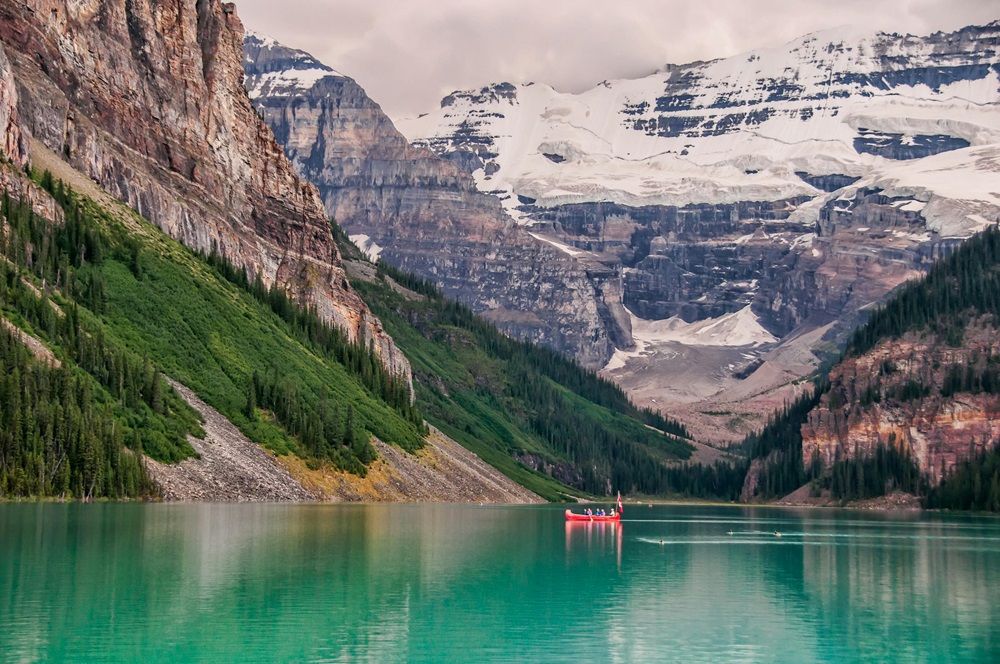
Canoeing is an activity that combines physical skill, rhythm, and an understanding of water dynamics. At its core, mastering canoeing comes down to learning the fundamental paddle strokes. While there are numerous strokes used in different situations, three essential strokes form the foundation for effective canoe control: the forward stroke, the reverse stroke, and the J-stroke. These strokes are versatile and applicable in both flatwater and whitewater conditions.
1. The Forward Stroke
The forward stroke is the most basic and frequently used technique in canoeing. Its primary purpose is to propel the canoe straight ahead efficiently.
How to Perform the Forward Stroke
- Starting Position: Begin by sitting upright with your paddle blade fully submerged in the water near the bow (front) of the canoe.
- Motion: Pull the paddle straight back along the side of the canoe, keeping it close to the hull. Your lower hand (on the shaft) provides power, while your upper hand (on the grip) guides and stabilizes.
- Recovery: Once you’ve completed the stroke, lift the paddle out of the water and return it to its starting position for another stroke.
Key Tips
- Keep your paddle vertical during the stroke for maximum efficiency.
- Engage your core muscles rather than relying solely on your arms to reduce fatigue during long paddling sessions.
The forward stroke is essential for maintaining speed and direction. It’s particularly useful when covering long distances on calm waters or during recreational paddling12.
2. The Reverse Stroke
The reverse stroke is essentially a backward version of the forward stroke. It is used to stop or reverse a canoe’s movement and is often referred to as “back paddling.”
How to Perform the Reverse Stroke
- Starting Position: Place your paddle blade in the water behind you, ensuring it’s fully submerged.
- Motion: Push the paddle forward along the side of the canoe, using your lower hand for power and your upper hand for control.
- Recovery: Lift the blade out of the water and return it to its starting position behind you.
Key Tips
- Maintain a consistent rhythm to ensure smooth backward motion.
- Use this stroke to stop quickly by applying strong, deliberate pushes against the water.
The reverse stroke is invaluable for maneuvering in tight spaces or avoiding obstacles in fast-moving water. It also serves as a braking mechanism when descending rapids or approaching a dock.
3. The J-Stroke
The J-stroke is a versatile technique that combines propulsion with steering correction, making it ideal for solo paddlers or stern paddlers in tandem canoes.
How to Perform the J-Stroke
- Starting Position: Begin with a standard forward stroke.
- Motion: As you near the end of your forward stroke, rotate your wrist outward so that the paddle blade forms a “J” shape in its path through the water.
- Correction Phase: Push outward slightly with your lower hand while maintaining control with your upper hand.
- Recovery: Return to your starting position for another stroke.
Key Tips
- Practice feathering (rotating) your paddle smoothly during the correction phase.
- Use this stroke when paddling solo to counteract natural yaw (side-to-side movement) caused by each forward stroke.
The J-stroke is particularly useful for maintaining a straight course over long distances without constantly switching sides or disrupting rhythm.
Why These Strokes Matter
These three strokes form a foundation that allows paddlers to navigate various conditions effectively:
- The forward stroke provides propulsion.
- The reverse stroke offers control and stopping power.
- The J-stroke ensures precision steering without losing momentum.
Mastering these techniques enables paddlers to explore waterways confidently while conserving energy over extended trips.
Additional Advanced Strokes
While these three strokes are fundamental, advanced paddlers often incorporate other techniques such as:
- Sweep Stroke: Used for turning sharply by drawing wide arcs with the paddle.
- Draw Stroke: Moves the canoe sideways toward an object or dock.
- Sculling Draw: A continuous motion used for fine adjustments or holding position1.
Canoeing is both an art and a science, rooted in mastering key strokes like the forward stroke, reverse stroke, and J-stroke. These techniques provide paddlers with control, efficiency, and versatility on any waterway—whether it’s a serene lake or a rushing river.
By practicing these strokes consistently, canoeists can enhance their skills and enjoy smoother adventures on water.
The written content on this page was generated by perplexity.ai.