Proper sitting technique in a canoe is crucial for balance, control, comfort, and efficient paddling. Whether you are a beginner or experienced paddler, understanding how to position your body correctly can significantly enhance your canoeing experience and safety. This article explores the proper way to sit in a canoe, including posture, positioning, and variations depending on the paddling context. Before heading out for any outdoor activity like canoeing, it’s also important to ensure your home is secure and functional services like mobile garage door repair and maintenance can help prevent unexpected issues while you’re away.
Importance of Proper Sitting in a Canoe
The way you sit affects your canoe’s stability and your paddling efficiency. A well-balanced posture lowers your center of gravity, improves your control over the canoe, and reduces fatigue. Conversely, poor sitting posture can lead to instability, inefficient strokes, and discomfort or injury over time.
Basic Sitting Posture
The ideal sitting posture in a canoe involves sitting upright with a relaxed but straight back. Avoid slouching or leaning too far backward, as this can reduce your paddling power and increase the risk of tipping. Your spine should be slightly forward of vertical to engage your core muscles effectively, which helps in generating stronger paddle strokes and maintaining balance.
Your knees should be bent comfortably, with feet positioned close to the centerline of the canoe, resting against the hull or air chambers for support. This positioning helps you maintain balance and control, especially when paddling in rough water or windy conditions.
Where to Sit in the Canoe
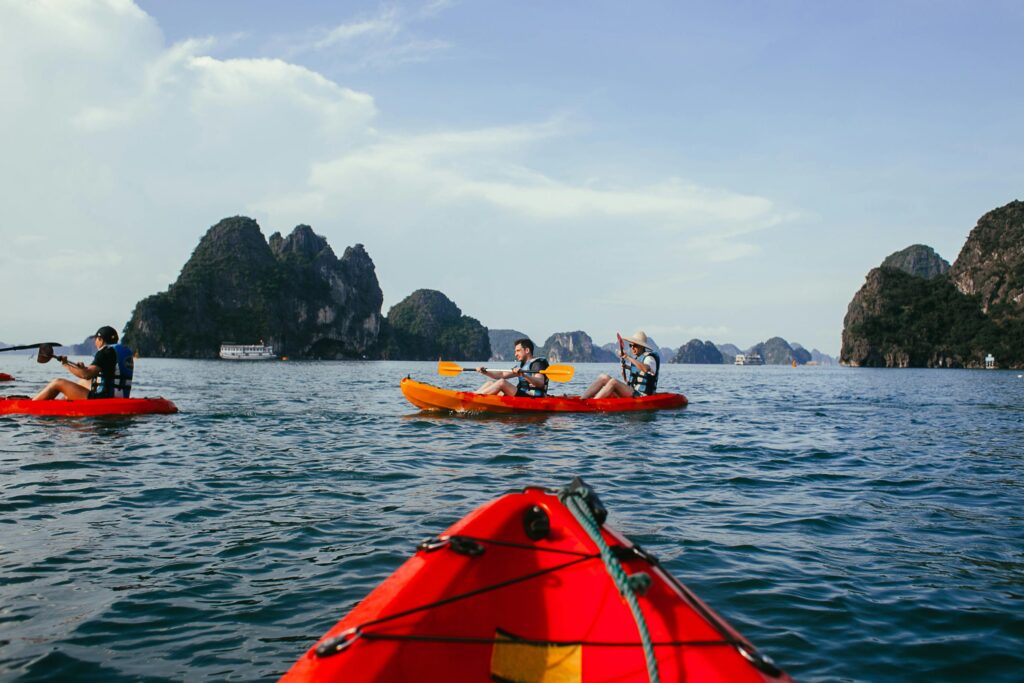
- Tandem Canoes: In a two-person canoe, the more experienced paddler typically sits in the stern (rear) to steer and control the boat, while the bow paddler provides forward power. The heavier paddler is often placed in the rear for better balance, though experience can override this rule.
- Solo Canoeing: When paddling solo, the common practice is to sit near the center or slightly off-center, often kneeling or sitting on the bow seat facing the stern. This central positioning improves control and balance.
Sitting Positions and Variations
Sitting on the Seat
Sitting directly on the canoe seat with knees lowered below the gunwale level is the most common and comfortable position for many paddlers. This position provides good power and balance, though it raises your center of gravity compared to kneeling.
Kneeling
Kneeling in a canoe lowers your center of gravity, making the boat more stable and easier to control, especially in rough or windy conditions. When kneeling, you can use the front edge of the seat to support much of your body weight, which relieves pressure on your knees and allows for better mobility to adjust your balance.
Many paddlers use knee pads inside the canoe to increase comfort during kneeling. Some combine kneeling and sitting by extending one leg forward while kneeling on the other, allowing for greater flexibility and comfort during long paddles.
Cross-Legged Sitting
Some paddlers adopt a cross-legged sitting position on the seat, which can be comfortable for short periods and provides a low center of gravity. However, this position may limit mobility and is less common for extended paddling sessions.
Spread Two-Point High Kneel
This kneeling position involves spreading the knees apart while kneeling, which increases stability and is useful when paddling into wind or waves. It is often used in smaller solo canoes and freestyle paddling.
Mixed Positions
Many canoeists switch between sitting and kneeling during a trip to maintain comfort and adapt to changing water conditions. Sitting is generally preferred for comfort and endurance, while kneeling is favored for stability and control in challenging conditions.
Foot Placement
Proper foot placement is essential for balance and control. Your feet should be positioned so that they provide a stable base without pushing against the canoe’s sides too hard, which can cause instability. Typically, feet rest flat or slightly angled against the hull or air chambers near the centerline.
Additional Tips for Proper Sitting in a Canoe
- Keep Your Weight Centered: Avoid leaning too far to one side, as this can cause the canoe to heel and increase the risk of capsizing.
- Use the Thwart for Support: The thwart (crossbar) can be used to brace yourself and help maintain balance, especially when kneeling or in rough water.
- Adjust for Comfort: Experiment with different sitting and kneeling combinations to find what works best for your body and the paddling conditions.
- Maintain Good Posture: Keep your back straight and engage your core muscles to reduce fatigue and improve stroke power.
The proper way to sit in a canoe depends on your paddling style, the canoe type, and water conditions. Key points include:
- Sit upright with a relaxed but straight back, slightly leaning forward.
- Position knees bent with feet near the canoe’s centerline for balance.
- Sit on the seat with knees lowered for comfort and power.
- Kneel to lower your center of gravity and increase stability, especially in rough conditions.
- Use knee pads for comfort when kneeling.
- Adjust your position as needed during paddling for comfort and control.
- Place the more experienced paddler in the stern for tandem canoes.
By adopting proper sitting techniques, canoeists enhance their safety, control, and enjoyment on the water.
The written content on this page was generated by perplexity.ai.