Canoeing is a rewarding outdoor activity that allows you to explore waterways and connect with nature. However, successful navigation requires skill, knowledge, and preparation. This article will provide a detailed guide on how to navigate a canoe effectively, covering essential techniques, equipment, and safety considerations.
Understanding Basic Canoe Strokes
Before delving into navigation, it’s crucial to master basic canoe strokes. The person in the front of the canoe provides power, while the person in the back steers and keeps the boat on course.
The front paddler should focus on strong, steady strokes to create forward momentum. They also serve as a lookout for obstacles like rocks or submerged logs.
The rear paddler is responsible for steering the canoe. One of the most important strokes for steering is the J-stroke. This involves twisting the wrist to the inside at the end of each stroke, creating a “J” shape in the water. While it may seem complicated at first, the J-stroke becomes second nature with practice.
Reading the Water
Successful canoe navigation involves reading the water to identify the safest and most efficient route. When approaching rapids, look for V-shaped patterns in the water:
- A V pointing upstream indicates a rock or obstacle at its point. Avoid these areas.
- A V pointing downstream shows a clear path. Aim to steer into the opening of this V.
Always be on the lookout for potential hazards such as logs, fallen trees, or other obstacles. Give these a wide berth when possible.
Using Navigation Tools
While traditional canoeing often relies on visual navigation and map reading, modern technology offers additional tools to enhance your navigation skills:
- Marine Navigation Apps: These can turn your smartphone or tablet into a powerful navigation device. Popular apps like Aqua Map, Argo, and C-Map offer features such as offline charts, weather forecasts, tide information, and route planning.
- GPS Devices: Dedicated GPS units designed for marine use can provide accurate position information and help with waypoint navigation.
- Compass: A reliable compass is essential for navigation, especially in areas with limited visibility or when far from shore.
- Charts and Maps: Carry detailed charts or maps of the area you’re paddling. Familiarize yourself with chart symbols and how to read depth contours and other important information.
Planning Your Route
Effective canoe navigation begins before you even hit the water. Proper route planning is essential for a safe and enjoyable trip:
- Study the area: Familiarize yourself with the waterway you’ll be paddling. Look for potential hazards, portage points, and areas of interest.
- Check weather and water conditions: Be aware of forecasted weather and any potential changes. Also, check water levels and flow rates for rivers.
- Estimate travel time: Consider factors like your paddling speed, current strength, and potential rest stops when planning your route.
- Create a float plan: Leave detailed information about your planned route, expected return time, and emergency contacts with someone on shore.
Navigation Techniques
Once on the water, employ these navigation techniques:
- Piloting: This involves using visible landmarks to determine your position and stay on course. Identify key features like buoys, day marks, or lighthouses and correlate them with your chart.
- Dead Reckoning: This technique estimates your position based on your last known location, speed, and time traveled. It’s particularly useful when visibility is limited.
- Triangulation: If you can see three distinct landmarks, you can use their bearings to pinpoint your position on a chart.
- Following Shorelines: In coastal areas or on large lakes, following the shoreline (also known as “handrailing”) can be an effective navigation technique.
Navigating in Different Conditions
Navigation challenges can vary depending on the type of water you’re paddling:
- Rivers: Pay attention to the current and be prepared to navigate around obstacles. In whitewater, scout ahead when possible and choose your line carefully.
- Lakes: Be aware of wind direction and strength, as this can affect your course. On large lakes, use distant landmarks for navigation.
- Coastal Waters: Understanding tides and currents is crucial. Use tide tables and current charts to plan your route and timing.
- Limited Visibility: In fog or darkness, rely more heavily on your compass and any electronic navigation aids. Proceed with caution and be prepared to stop if conditions become too dangerous.
Safety Considerations
Safe navigation goes hand-in-hand with general canoeing safety:
- Always wear a properly fitted Personal Flotation Device (PFD).
- Carry essential safety equipment, including a whistle or other signaling device, a first aid kit, and a waterproof flashlight.
- Be prepared for sudden weather changes by bringing appropriate clothing and gear.
- If paddling in a group, establish clear communication signals and stick together.
- Know your limits and the limits of your group. Don’t attempt routes beyond your skill level.
Improving Your Navigation Skills
Becoming a proficient canoe navigator takes time and practice. Consider these steps to improve your skills:
- Take a course: Many organizations offer navigation courses specifically for paddlers.
- Practice in familiar waters: Hone your skills in well-known areas before tackling more challenging routes.
- Learn from experienced paddlers: Join a canoe club or group to learn from more seasoned navigators.
- Keep a log: Record your trips, noting navigation challenges and how you overcame them.
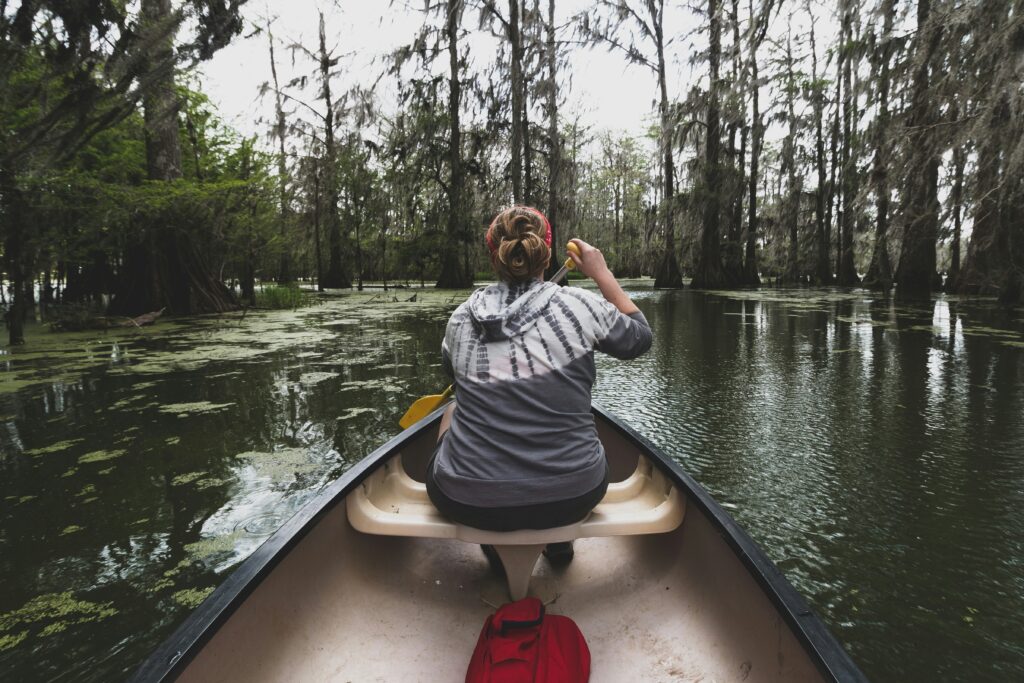
Navigating a canoe effectively combines skill, knowledge, and the right tools. By mastering basic strokes, learning to read the water, utilizing navigation aids, and understanding different techniques, you can confidently explore a wide range of waterways. Remember that safety should always be your top priority, and continuous learning and practice are key to becoming a skilled canoe navigator.
Whether you’re planning a leisurely paddle on a calm lake or an extended wilderness expedition, these navigation skills will help ensure your canoeing adventures are safe, enjoyable, and rewarding. So grab your paddle, chart your course, and set out to explore the wonderful world of canoeing!
The written content on this page was generated by perplexity.ai.